
ATL, BTL, and TTL Advertising: A Complete Guide to Marketing Communication Strategies
In today's dynamic marketing landscape, businesses must navigate through various advertising approaches to reach their target audiences effectively. The three primary marketing communication strategies - Above the Line (ATL), Below the Line (BTL), and Through the Line (TTL) advertising - each serve distinct purposes in building brand awareness, driving conversions, and maximizing return on investment. Understanding when and how to implement these advertising methodologies can significantly impact your marketing success and business growth.
Let's understand Above the Line (ATL) Advertising
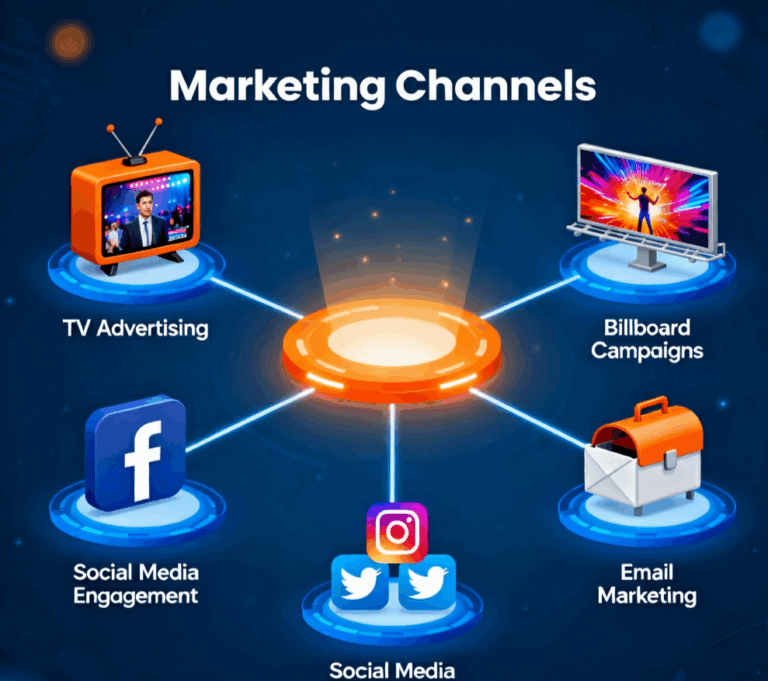
Above the Line advertising represents mass marketing strategies that cast a wide net to reach broad, largely untargeted audiences. This traditional form of advertising utilizes mainstream media channels including television commercials, radio advertisements, print media, billboards, and outdoor advertising to build brand recognition and awareness. The term originated in 1954 when Procter & Gamble began separating direct promotional activities from wider advertising campaigns, creating the foundational distinction still used today.
ATL marketing campaigns excel at creating widespread brand visibility without focusing on specific demographic targeting. Television advertisements during prime time slots can reach millions of viewers simultaneously, while billboard campaigns along major highways ensure continuous exposure to diverse audiences. Radio commercials leverage the medium's affordability and frequency potential, as psychological research indicates consumers need exposure to advertising messages at least three times before they begin to penetrate. Print advertisements in newspapers and magazines provide both local and international reach, with magazines offering niche-specific targeting opportunities for specialized brands.

Strategic Advantages of ATL Advertising
The primary strength of ATL advertising lies in its massive reach capabilities, enabling brands to achieve national and international exposure through single campaigns. Television and radio advertisements create superior audience connections through audio-visual elements, fostering emotional engagement that static images cannot match. These campaigns serve as crucial tools for brand building, helping establish brand identity and recognition across diverse consumer segments. ATL strategies prove particularly effective for large corporations with broad target markets seeking to increase overall brand awareness and market presence.
Brand awareness campaigns through ATL channels create long-term value by establishing market positioning and consumer recall. The mass media approach ensures consistent message delivery across multiple touchpoints, reinforcing brand messaging through repeated exposure. For businesses entering new markets or launching new products, ATL advertising provides the foundational awareness necessary for subsequent marketing efforts to succeed.
Limitations and Disadvantages of ATL Marketing
Despite its reach advantages, ATL advertising faces significant cost barriers that can make it prohibitive for smaller businesses. Prime time television slots and high-circulation print advertisements command premium pricing, often requiring substantial marketing budgets that exceed millions of dollars for comprehensive campaigns. The lack of precise targeting means significant portions of the audience may fall outside the intended demographic, resulting in wasted advertising spend.
Measuring the effectiveness of ATL campaigns presents ongoing challenges, as tracking direct conversions from mass media exposure proves difficult. The broad nature of ATL advertising makes it challenging to attribute specific sales or customer actions to individual campaigns, complicating return on investment calculations. Additionally, ATL strategies typically focus on brand building rather than immediate conversions, making them less suitable for businesses requiring quick sales results.
Now Let's explore Below the Line (BTL) Advertising
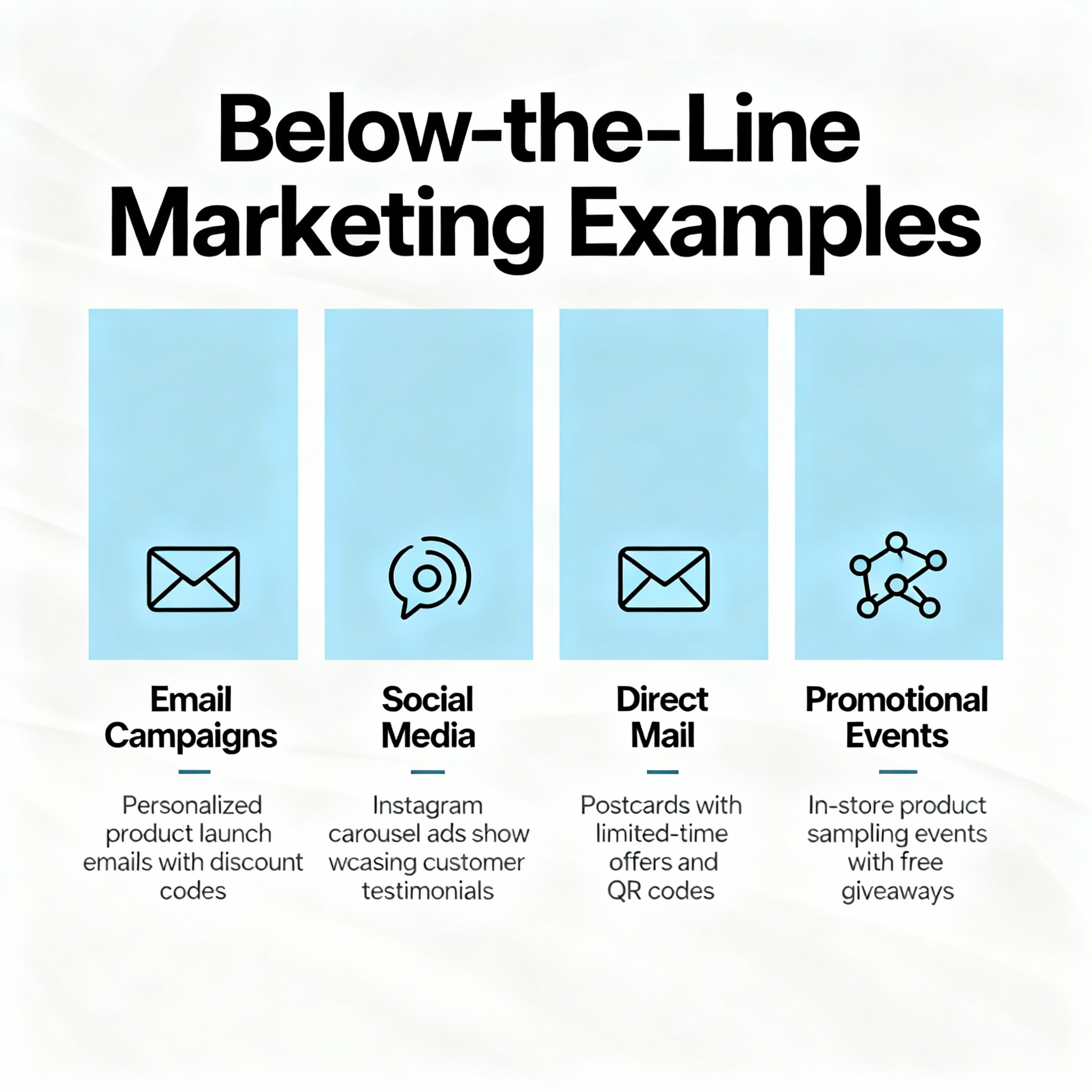
Below the Line advertising encompasses targeted, direct marketing strategies focused on specific consumer segments and measurable outcomes. Unlike ATL’s mass approach, BTL marketing emphasizes precision targeting, personalized communication, and direct customer engagement through channels including email marketing, social media campaigns, direct mail, trade shows, and promotional events. This approach prioritizes conversion generation over broad brand awareness, making it ideal for businesses seeking immediate, quantifiable results.
BTL marketing strategies leverage detailed consumer data and market research to identify and reach specific audience segments most likely to convert. Direct mail campaigns can be tailored to individual customer preferences and purchasing history, while email marketing enables personalized messaging based on customer behavior and engagement patterns. Social media marketing allows for sophisticated demographic and interest-based targeting, ensuring advertising messages reach users most likely to engage with the brand.
Benefits of BTL Marketing Strategies
- The targeted nature of BTL advertising delivers superior return on investment compared to broader marketing approaches. Precise audience targeting means marketing budgets reach consumers more likely to convert, reducing waste and improving campaign efficiency. BTL methods provide excellent trackability, enabling marketers to monitor customer responses, measure conversion rates, and calculate exact returns on advertising spend. This measurability allows for real-time campaign optimization and data-driven decision making.
- BTL marketing fosters stronger customer relationships through personalized communication and direct engagement opportunities. Brand activation campaigns create memorable experiences that build emotional connections between consumers and brands. In-store marketing activities leverage point-of-purchase opportunities to influence buying decisions at crucial moments. The ability to tailor messages to specific customer segments enables more relevant, compelling communication that resonates with target audiences.
Limitations of BTL Marketing Strategies
BTL marketing campaigns typically reach smaller audiences compared to mass media approaches, limiting overall brand exposure. The focused targeting that makes BTL effective also constrains its reach, making it less suitable for broad brand awareness objectives. Implementation requires extensive market research and consumer data analysis, demanding specialized resources and expertise that smaller businesses may lack.
Campaign setup and management can be resource-intensive, requiring sophisticated tracking systems, database management, and ongoing optimization efforts. While BTL marketing offers better ROI potential, upfront investments in research, technology, and skilled personnel can present barriers for businesses with limited marketing resources. The direct nature of BTL advertising also carries greater risk if targeting strategies prove inaccurate or if market conditions change rapidly.
Finally let's understand Through the Line (TTL) Marketing
Through the Line marketing represents the evolution of advertising strategy, combining ATL’s broad reach with BTL’s targeted precision to create comprehensive, integrated campaigns. TTL approaches leverage both mass media and direct marketing channels to guide consumers through the entire customer journey, from initial awareness to final conversion. This integrated methodology recognizes that modern consumers interact with brands across multiple touchpoints and require consistent messaging throughout their decision-making process.
TTL campaigns might begin with television advertisements to create broad awareness, followed by targeted social media campaigns to engage interested consumers, and conclude with personalized email sequences to drive conversions. Digital marketing exemplifies TTL principles by offering both broad reach through display advertising and precise targeting through programmatic advertising technologies. This approach ensures brands maintain visibility across all consumer touchpoints while optimizing for specific outcomes at each stage of the customer journey.
Advantages of BTL Marketing Strategies
The integrated approach of TTL marketing creates synergistic effects that amplify the impact of individual campaign elements. By combining mass reach with targeted engagement, TTL campaigns achieve both widespread brand awareness and focused conversion generation. This comprehensive strategy enables brands to capture consumer attention at multiple touchpoints, increasing the likelihood of successful customer acquisition and retention.
TTL marketing allows for optimized budget allocation across different channels based on performance and objectives. Marketers can invest in ATL channels for awareness building while simultaneously running BTL campaigns for conversion generation, creating a balanced approach that addresses both short-term and long-term business goals. The integrated nature of TTL campaigns also provides multiple data points for measurement and optimization, enabling more sophisticated performance analysis and strategy refinement.
Limitations of BTL Marketing Strategies
TTL marketing requires significant coordination across multiple channels, platforms, and teams, making campaign management considerably more complex. Success depends on maintaining consistent messaging and brand identity across diverse media, requiring sophisticated project management and communication systems. The integrated approach demands expertise in both mass media and direct marketing, potentially requiring larger marketing teams or external agency partnerships.
Budget requirements for TTL campaigns can be substantial, as they combine the costs of both ATL and BTL approaches. Resource allocation becomes more challenging when managing simultaneous campaigns across multiple channels, requiring careful planning and budget management. The complexity of TTL integration can also make it difficult to isolate the impact of individual campaign elements, complicating performance measurement and optimization efforts.
Strategic Applications and Use Cases
The choice between ATL, BTL, and TTL strategies depends on specific business objectives, target audiences, and available resources. New businesses or those entering new markets typically benefit from ATL approaches to establish basic brand recognition and market presence. Established brands with specific product launches or promotional objectives may find BTL strategies more effective for driving targeted actions and measurable results.
Large corporations with diverse product portfolios often employ TTL strategies to maintain broad market presence while targeting specific segments for particular offerings. Service-based businesses frequently leverage BTL approaches for their relationship-building capabilities and ability to demonstrate value through direct customer interactions. E-commerce businesses commonly integrate TTL strategies, using display advertising for awareness and search engine marketing for conversion capture.
Seasonal businesses and those with time-sensitive promotions benefit from BTL’s immediate impact and trackable results. Companies in competitive markets may require ATL’s broad reach to maintain market share and brand visibility against competitors. Technology companies often employ TTL approaches to reach both technical decision-makers through targeted channels and broader audiences through mass media.
Digital Transformation of Traditional Advertising Lines
The digital revolution has significantly blurred the traditional lines between ATL, BTL, and TTL advertising, creating new opportunities and challenges for marketers. Social media platforms exemplify this transformation, offering both broad reach capabilities similar to traditional ATL channels and sophisticated targeting options characteristic of BTL approaches. Digital advertising technologies enable real-time optimization, precise audience segmentation, and detailed performance tracking across all campaign types.
Programmatic advertising platforms automate media buying across multiple channels, enabling TTL strategies at scale while maintaining cost efficiency. Search engine marketing combines broad keyword targeting for awareness with specific long-tail keywords for conversion, embodying TTL principles within single platforms. Content marketing strategies can simultaneously build brand awareness through viral content distribution and drive targeted actions through personalized messaging.
The integration of artificial intelligence and machine learning into advertising platforms has enhanced the precision and effectiveness of all three approaches. These technologies enable better audience identification for BTL campaigns, improved frequency optimization for ATL strategies, and more sophisticated integration for TTL approaches. The result is increasingly sophisticated advertising ecosystem that requires modern marketers to understand and leverage capabilities across all three traditional categories.
Understanding and effectively implementing ATL, BTL, and TTL advertising strategies remains crucial for modern marketing success. Each approach offers distinct advantages and serves specific business objectives, from building widespread brand awareness to driving targeted conversions. The most successful marketing programs often integrate elements from all three approaches, creating comprehensive strategies that address diverse audience needs and business goals. As digital technologies continue to evolve, the lines between these traditional categories will likely continue to blur, requiring marketers to remain adaptable and strategic in their approach to campaign development and implementation.

Sibham Saha
Author